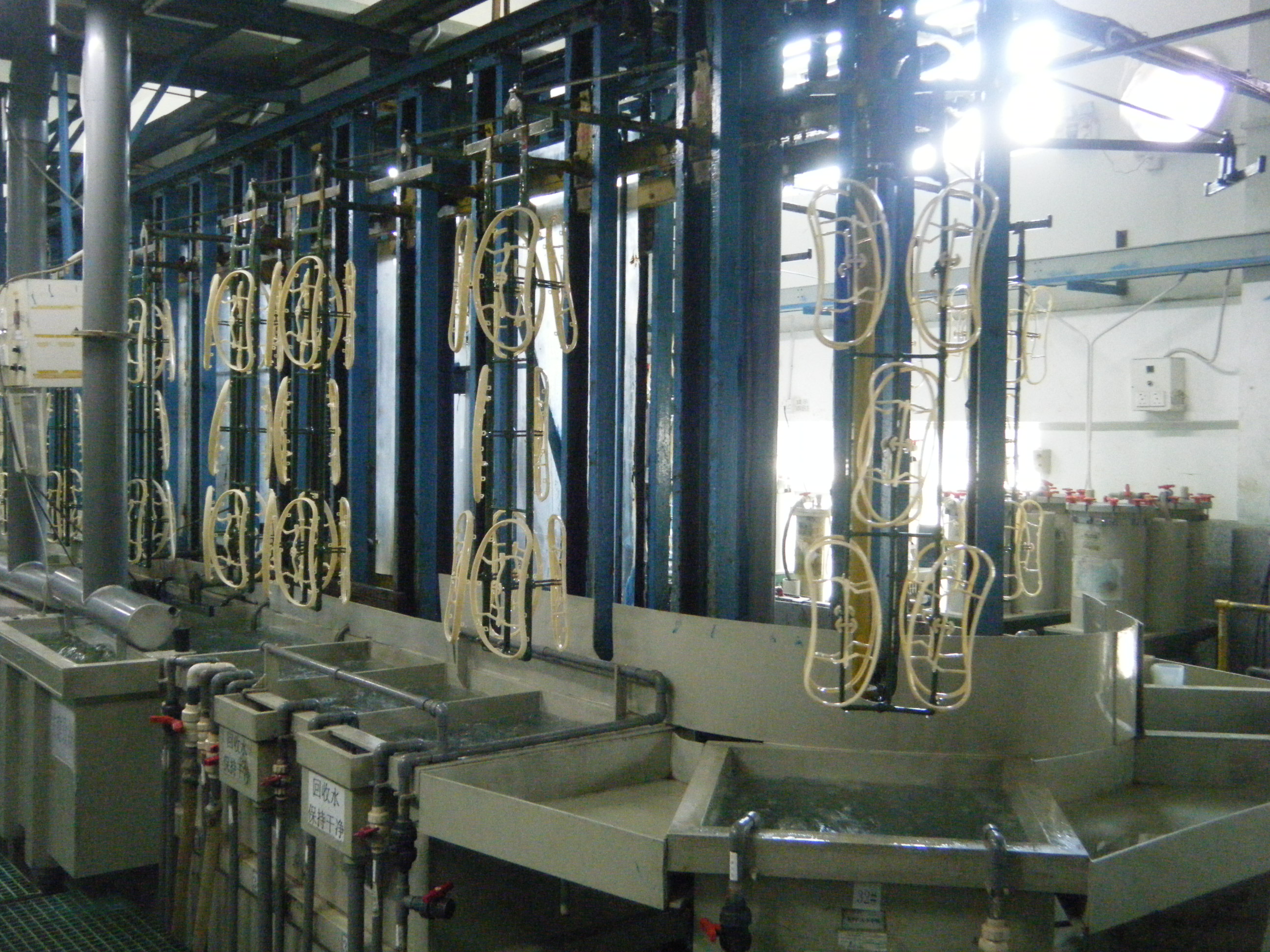
plastic part chrome plating
The Electroplating Industry in China: Status, Contributions, Environmental Impact and Cleaner Production
1. Current Status of China’s Electroplating Industry
As a key surface engineering technology, electroplating has a history of over 160 years since the silver plating patent was filed in 1840. Since the 20th century, with advancing science and industrialization, industries such as automotive, machinery, shipbuilding, aerospace, electronics, and light industry have become increasingly reliant on electroplating for surface treatment. Today, electroplating has evolved from basic decorative and protective functions to high corrosion resistance and functional applications, with its scope expanding through the development of new processes, materials, and equipment.
Against the backdrop of economic globalization and technological innovation, China has become a destination for industrial transfer from developed countries, emerging as a major global manufacturing hub. Developed nations have adopted advanced electroplating technologies (e.g., chromium replacement processes, nanotechnology, brushed gold/ matte gold/ gunmetal plating, aluminum alloy plating, and plastic plating) and modern environmental management systems, while Chinese electroplating has grown significantly since the reform and opening-up.
- Enterprise Scale & Distribution: Incomplete statistics show nearly 20,000 electroplating facilities nationwide, with 40% concentrated in the Pearl River Delta (PRD) and Yangtze River Delta (YRD) regions, contributing 60% of the national output value.
- Industry Distribution: 33.8% serve the machinery industry, 20.2% the light industry, 5%-15% the electronics industry, and the rest aerospace, astronautics, and instrumentation sectors.
- Plating Types: Zinc plating dominates (35%-45%), followed by copper, nickel, and chromium plating (around 20% each); plating of lead, tin, and gold for electronics accounts for 5%.
- Equipment Gap: Most enterprises operate with outdated or manual equipment, while only a small number have internationally advanced facilities and technologies.
China has grown into a major electroplating nation (not yet a powerhouse) as manufacturers from Hong Kong, Taiwan, Southeast Asia, South Korea, and other regions established facilities here. As a resource-saving industry focused on precious metal conservation, electroplating has become an irreplaceable and growing sector in China’s national economy.
2. Contributions of the Electroplating Industry to the National Economy
The electroplating industry plays a pivotal role in China’s economic development, as evidenced by its contributions to Guangdong Province’s industrial growth:
- Electronics Industry
- Guangdong’s electronic information industry led the nation in output value for 13 consecutive years (1991–2006), with 7 out of 16 top enterprises (over ¥10 billion in revenue) based there.
- Key applications: Electroplating/electroless plating for CPU and LSI packaging; vibration plating for PCB-mounted chip resistors/capacitors; core PCB processes (through-hole electroless copper plating, pattern copper plating, tin plating, electroless nickel-gold plating); electroless plating for micro-motor shafts (enhancing hardness/wear resistance); electroplated nickel foam for battery electrodes; and decorative plating for consumer electronics components.
- Automotive Industry
- Guangdong produced 555,200 vehicles with an output value of ¥116.223 billion, and Guangzhou’s auto parts exports reached $807 million (Jan–Nov). Electroplating is critical for wheels, exhaust mufflers, PCBs, and high-end trim panels.
- Machinery Manufacturing
- Guangzhou’s above-scale heavy industry achieved ¥460 billion in output (21% YoY growth, contributing over 75% of industrial growth). Electroplating is indispensable for heavy machinery, construction/mining equipment, plastic/paper machinery, machine tools, and auto molds.
- Lighting Industry
- China’s lighting industry exceeded ¥100 billion in output (2003), with Zhongshan’s Guzhen Town accounting for 60% of domestic production (“Asia’s Lighting Capital”). It relies on imitation gold/black nickel plating, gold/silver plating, and electrophoresis.
- Sanitary & Plumbing Products
- China produces over 30% of global plumbing goods; Guangdong’s Kaiping Shuikou Town (¥3 billion output) and Seagull Sanitary Ware (¥1.7 billion revenue, 2006) are key hubs, supplying 40% of the domestic market. Electroplating ensures corrosion resistance and aesthetics.
- Lock Industry
- Xiaolan’s lock manufacturers (4 enterprises with ¥100 million+ output, 340 million locks/year) use imitation gold/black nickel plating and zinc plating for components.
- Metal Furniture
- Guangdong accounts for 1/3 of national furniture output and 15% of exports. Metal furniture uses copper-nickel-chromium plating (multi-layer nickel for high-end lines), while aluminum alloy furniture requires electrolytic coloring.
- Jewelry Industry
- Guangdong processes over 90% of Hong Kong’s inlaid jewelry, with 100+ factories generating $2 billion/year in exports, and 1,000+ imitation jewelry makers producing ¥50 billion/year. Precious metal plating (gold, rhodium, silver, ruthenium) is standard, with an estimated ¥1 billion annual electroplating output.
3. Environmental Situation and the Electroplating Industry’s Impact
3.1 National Environmental Context
While China has made progress in environmental protection (stabilized air/water quality, controlled pollutant emissions, strengthened ecological governance), challenges persist: excessive pollutant discharge, urban water/air pollution, acid rain, soil contamination, and biodiversity loss. Environmental issues accumulated over a century in developed nations have emerged in China within 20 years, threatening public health and economic sustainability amid rapid growth.
3.2 Industry-Specific Impact (Guangdong Case)
- Wastewater Emissions: Guangdong’s electroplating sector discharged 55.09 million tons of wastewater (2002, 3.77% of industrial total), with key pollutants including heavy metals (Cr, Ni, Cu), pH imbalance, cyanide, and COD.
- 2005 Data: Guangdong’s industrial wastewater reached 2.32 billion tons (82.9% compliance rate), with 292,000 tons of COD (17.1% YoY increase), 76.5 tons of toxic pollutants (cyanide, arsenic, Hg, Cd, Cr, Pb, phenol), and 9,000 tons of ammonia nitrogen. Electroplating wastewater poses significant environmental risks.
4. Mandatory Cleaner Production Audits for Electroplating Enterprises
To address environmental challenges, China’s Cleaner Production Promotion Law mandates audits for:
- Enterprises with excessive pollutant discharge or exceeding emission quotas (Category 1).
- Enterprises using/discharging toxic/hazardous substances (Category 2).
Guangdong has implemented strict regulations (Guangdong EPA Notices [2004] No.149 and [2007] No.8) to shut down non-compliant electroplating facilities and accelerate designated industrial park construction. Cleaner production focuses on source reduction, resource recycling, and process control to achieve energy savings, consumption reduction, pollution mitigation, and efficiency improvement—shifting from end-of-pipe treatment to preventive governance.
5. Feasibility of Treating Electroplating Waste
Electroplating waste (wastewater, waste gas, solid waste) can be effectively managed through cleaner production:
- Technology Upgrades: Adoption of eco-friendly processes (trivalent chromium plating/passivation, cyanide-free copper/zinc plating) reduces toxic raw material use.
- Resource Recycling: Wastewater reuse rates of 60% or higher are required, with strict controls on equipment leaks.
- Case Studies:
- Shenzhen Yuebao Electronics: 10%+ resource savings and 15% wastewater reduction via cleaner production.
- Guangdong Zhongcheng Chemical: Turned waste into revenue, generating ¥60 million/year in additional profits.
- Fulong Hardware (Panyu): 70% wastewater reuse, yielding ¥45,640/month in wastewater treatment profits (¥5 million/year total).
6. Conclusion
The electroplating industry is vital to China’s economy but faces environmental scrutiny. Through cleaner production and technological innovation, waste treatment is achievable. Enterprises must balance economic growth with environmental responsibility and social obligations, embracing energy-efficient, safe, and sustainable development to ensure long-term viability.