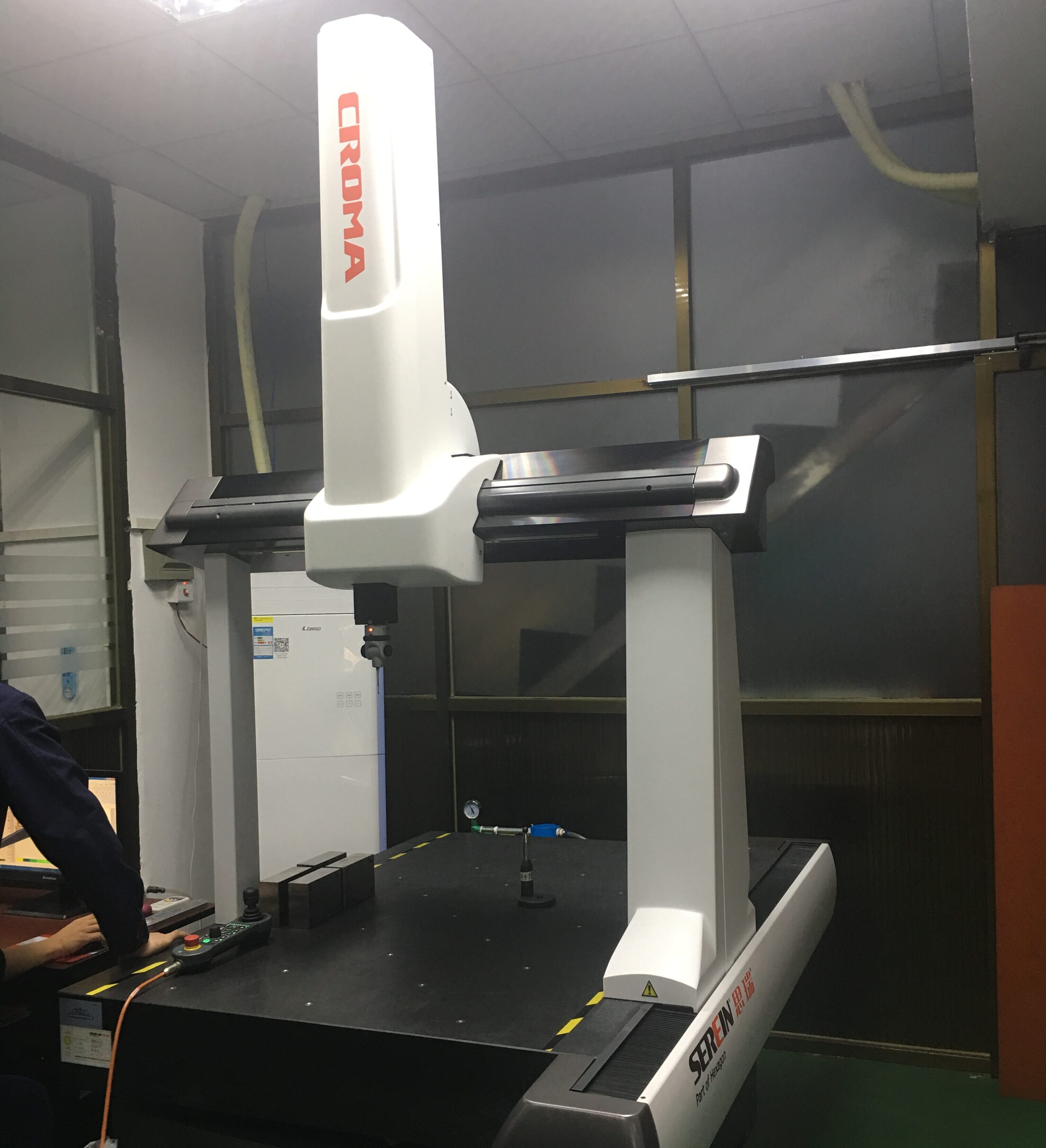
Mold Inspection
Ensuring the quality of a complex injection mold requires a full-cycle quality control system covering design validation, материальных & machining supervision, prototype testing, and post-delivery maintenance. Below is a detailed, stage-by-stage framework tailored to the unique challenges of complex molds (например, multi-slider mechanisms, high-precision cavities, and integrated hot-runner systems):
1. Pre-Manufacturing: Design Validation & Standardization
The design phase is the foundation of mold quality, especially for complex structures with interlocking mechanisms. Key measures include:
1.1 Adopt Advanced Simulation & Design Reviews
- CAE Mold Flow Analysis: Use professional software (например, Moldflow, Simcenter 3D) to simulate plastic filling, cooling, and warpage for complex molds (например, automotive intake manifolds or smartphone 3D curved frames). For molds with multi-zone hot runners, verify the balance of melt flow in each cavity to avoid short shots or over-packing; for thin-wall impeller molds, simulate the pressure distribution in blade cavities to prevent deformation.
- DFM (Design for Manufacturability) Audits: Organize cross-functional reviews with mold designers, machinists, and end-product engineers to identify potential issues:
- For molds with multi-directional hydraulic sliders (например, intake manifold molds), confirm slider stroke, synchronization logic, and interference avoidance with a 3D assembly simulation (tolerance ≤±0.02mm for slider alignment).
- For micro-structured molds (например, aerospace connectors with 0.2mm pin holes), validate the feasibility of micro-EDM machining and ejector pin durability in the design phase.
1.2 Define Clear Quality Standards & Material Specifications
- Mold Material Certification: For medical molds (например, 96-cavity syringe barrels), require suppliers to provide material certificates for medical-grade S136 stainless steel (including chemical composition and hardness reports, ensuring compliance with ISO 13485). For high-cycle molds (Класс SPI 101), specify hardened tool steel (например, H13 with ≥48 Rc for molding surfaces) and third-party hardness testing reports.
- Surface Treatment Specifications: Clearly define surface roughness (например, Ra 0.1μm mirror polishing for syringe cavities, Ra 0.4μm for intake manifold fitting surfaces) and coating requirements (например, DLC coating for smartphone frame molds, with adhesion and wear-resistance test standards).
2. During Manufacturing: Machining & Assembly Supervision
Complex molds rely on precise machining and error-free assembly; on-site or third-party supervision is critical:
2.1 Monitor Key Machining Processes
- High-Precision Machining Validation: For 5-axis CNC machining of curved cavities (например, 3D smartphone frames) or EDM of micro-pin holes (например, aerospace connectors), require real-time machining data (например, tool path, spindle speed) and dimensional inspection reports (using CMM with ±0.001mm accuracy) for critical features.
- Hot-Runner & Hydraulic System Calibration: For molds with multi-zone hot runners (например, intake manifold molds with 6–8 nozzles), verify temperature uniformity (variation ≤±5°C) during factory testing; for hydraulic slider systems, calibrate synchronization accuracy and pressure thresholds to avoid jamming during operation.
2.2 Strict Assembly & In-Process Inspection
- Component Fit Verification: For collapsible core mechanisms (например, air conditioner impeller molds) or rotary insert systems (например, smartphone frame insert molding), conduct dry-run tests (≥500 mold opening/closing cycles) to check component fit and movement smoothness. Record any abnormal noise or displacement and require adjustments before final assembly.
- Cooling Circuit Integrity Testing: For conformal cooling systems (например, porous sintered copper inserts in impeller molds), perform pressure testing (1.5x working pressure) to ensure no leaks, which could cause uneven cooling and product warpage.
3. Post-Manufacturing: Prototype Testing & Full Validation
Prototype and batch testing are the final checks to confirm mold performance before mass production:
3.1 Prototype Molding & Dimensional Verification
- Small-Batch Prototype Runs: Produce 50–100 trial parts using the target material (например, nylon+glass fiber for intake manifolds, PC+ABS for smartphone frames) and inspect key dimensions:
- For medical syringes, verify inner diameter tolerance (±0.005mm) and wall thickness uniformity (variation ≤0.01mm).
- For air conditioner impellers, test dynamic balance (residual unbalance ≤1g·cm) and blade dimensional consistency (height variation ≤0.01mm).
- Functional Testing of Complex Mechanisms: For molds with in-mold labeling (IML) or robotic ejection (например, syringe molds), validate automated integration to ensure no label misalignment or product sorting errors.
3.2 Long-Term Durability & Reliability Testing
- Life Cycle Testing: For high-volume molds, conduct accelerated durability tests (например, 10,000–50,000 injection cycles) to check wear of sliders, ejector pins, and cavity surfaces. For aerospace connector molds, verify that tungsten steel inserts maintain precision after 100,000 cycles.
- Certification Compliance: For medical or automotive molds, obtain third-party certification (например, FDA for medical syringes, IATF 16949 for auto parts) to confirm compliance with industry quality and safety standards, which adds 10–15% to the cost but ensures market access and quality credibility.
4. Post-Delivery: Maintenance & Непрерывное улучшение
Complex molds require regular maintenance to sustain quality over their service life:
4.1 Establish a Maintenance Plan
- Routine Inspection: For molds with hydraulic sliders or hot runners, schedule monthly checks of hydraulic pressure, hot-runner temperature sensors, and cooling circuit cleanliness. For micro-molds (например, aerospace connectors), clean and inspect ejector pins (0.15mm diameter) to prevent bending or breakage.
- Wear Part Replacement: Pre-order spare parts (например, wear plates for sliders, hot-runner nozzles) for quick replacement, minimizing downtime. For SPI Class 101 molds, replace cavity inserts when surface wear exceeds 0.01mm to maintain product precision.
4.2 Feedback Loop for Design Optimization
- Production Data Analysis: Collect real-time production data (например, cycle time, defect rate) during mass production. If warpage occurs in intake manifold parts, adjust the mold’s cooling circuit or hot-runner temperature based on data; if micro-connector pin holes show dimensional drift, refine the micro-EDM process parameters for future mold iterations.