Categories
- Recent Updates
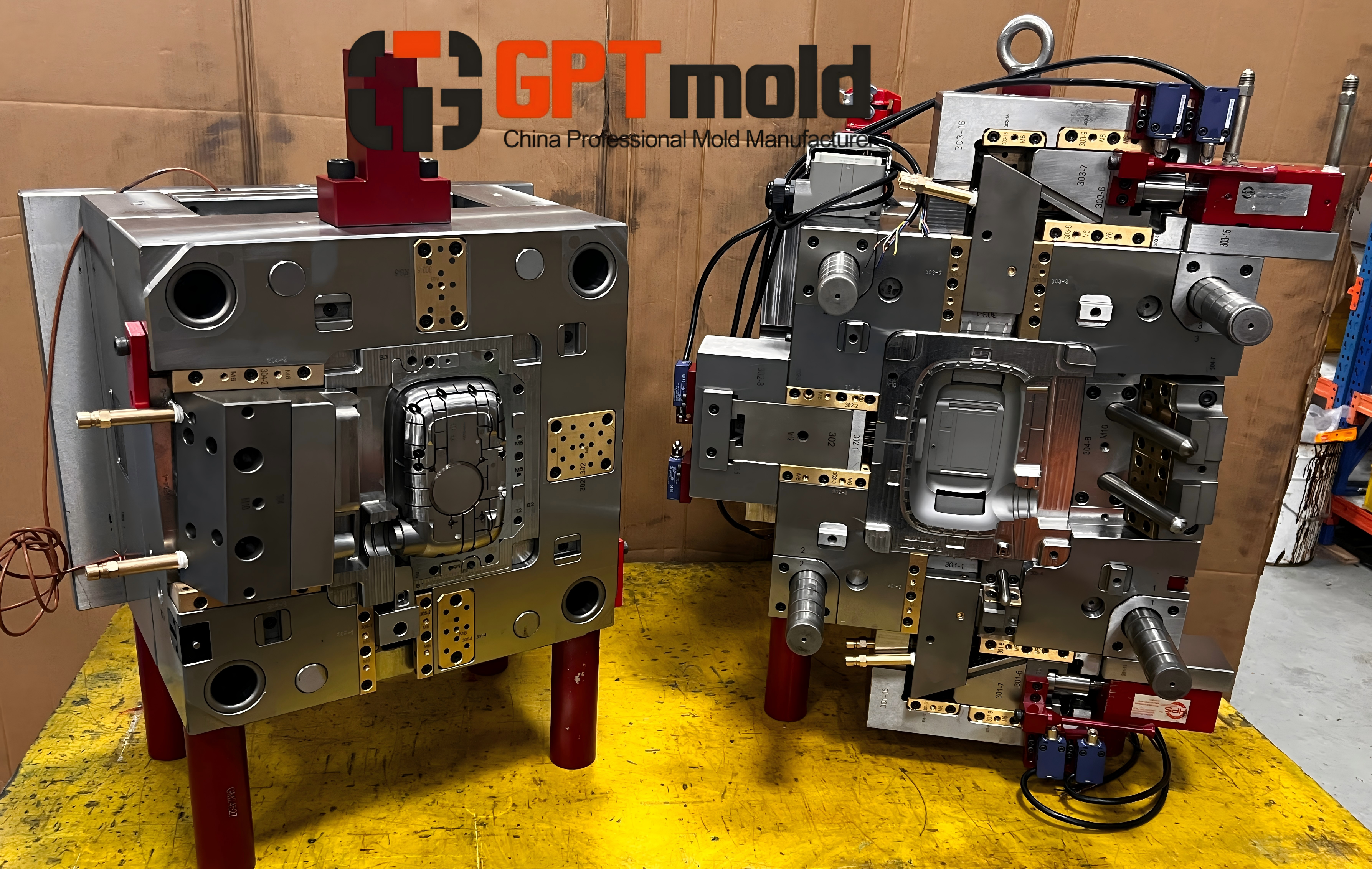
EXPORT MOLD TOOLING
General Specifications Common to All Class Molds:
Customer is to approve mold design prior to start of construction. All molds are to have adequate channels for temperature control. Wherever feasible, all details should be marked with steel type and Rockwell hardness. Customer name, part number and mold number should be stamped on all molds. All molds and large components should have adequate provisions for handling, i.e., eyebolt holes, prybar slots, etc.
SPI Class 101 Molds: (Rated for One Million or More Cycles) Mold design required. Mold base should be a minimum hardness of 280 BHN. Molding surfaces (cavities and cores) must be hardened to a minimum of 48 Rc. All other details, such as slides, heel blocks, gibs, wedge blocks, etc., should also be of hardened tool steels. Ejection should be guided. Slides must have wear plates. Temperature control provisions to be in cavities, cores and slides wherever possible. Over the life of the mold, corrosion in the cooling channels decreases cooling efficiency thus degrading part quality and increasing cycle time. It is therefore recommended that plates or inserts containing cooling channels be of a corrosive resistant material or treated to prevent corrosion. Parting line locks are required on all molds.
SPI 102 Molds: (Rated for no more than one million cycles) Mold design required. This mold is identical to the Type 101 with the following items not required: guided ejection, hardened slide wear plates, plated water channels, and, wear plated cavities. All other extras are optional. This tool is a medium to high production tool that is good for abrasive materials and/or close tolerance products.
SPI Class 103 Molds: (Rated for Under 500,000 Cycles) Mold design recommended. Mold base should be a minimum hardness of 165 BHN. Cores and cavities must be 280 BHN or higher. All other extras optional.
SPI Class 104 Molds: (Rated for Under 100,000 Cycles) Mold design recommended. Mold base can be of mild steel or aluminum. Cores and cavities can be of aluminum, mild steel or any other agreed upon metal. All other extras optional.
SPI Class 105 Molds: (Rated for no more than 500 cycles) The mold base may be constructed from cast metal or epoxy or any other material offering sufficient strength to produce the minimum prototype pieces. This tool is only for prototype purposes only. All other extras are optional.
| Mold Class | Cycle Count Rating | Design Requirement | Mold Base Hardness Requirement | Hardness Requirement for Molding Surfaces (Cavities and Cores) | Other Key Requirements |
| SPI Class 101 | 1,000,000 cycles or more | Mold design is required | Minimum 280 Brinell Hardness Number (BHN) | Minimum 48 Rockwell Hardness (Rc) | – All other components (e.g., slides, heel blocks, gibs, wedge blocks) must be made of hardened tool steels.- The ejection system should be guided.- Slides must be equipped with wear plates.- Temperature control provisions should be installed in cavities, cores, and slides wherever possible.- To prevent corrosion in cooling channels (which reduces cooling efficiency, impairs part quality, and extends cycle time over the mold’s service life), it is recommended that plates or inserts with cooling channels be made of corrosion-resistant materials or undergo anti-corrosion treatment.- Parting line locks are mandatory for all molds. |
| SPI Class 102 | No more than 1,000,000 cycles | Mold design is required | Same as Class 101 | Same as Class 101 | – The following items required for Class 101 are not mandatory: guided ejection, hardened slide wear plates, plated water channels, and wear-plated cavities.- All other additional features are optional.- This mold is a medium-to-high production tool, suitable for abrasive materials and/or products with tight tolerances. |
| SPI Class 103 | Under 500,000 cycles | Mold design is recommended | Minimum 165 BHN | Minimum 280 BHN | All other additional features are optional. |
| SPI Class 104 | Under 100,000 cycles | Mold design is recommended | Can be made of mild steel or aluminum | Can be made of aluminum, mild steel, or any other mutually agreed-upon metal | All other additional features are optional. |
| SPI Class 105 | No more than 500 cycles | No mandatory design requirement | Can be made of cast metal, epoxy, or any other material with sufficient strength to produce the minimum number of prototype parts | No specific hardness requirement (the material only needs to have sufficient strength for prototype production) | – This mold is exclusively for prototype manufacturing.- All other additional features are optional. |