Häufige Fehler bei komplexen Spritzgießformen & Wie man sie vermeidet
Inquiry- Description
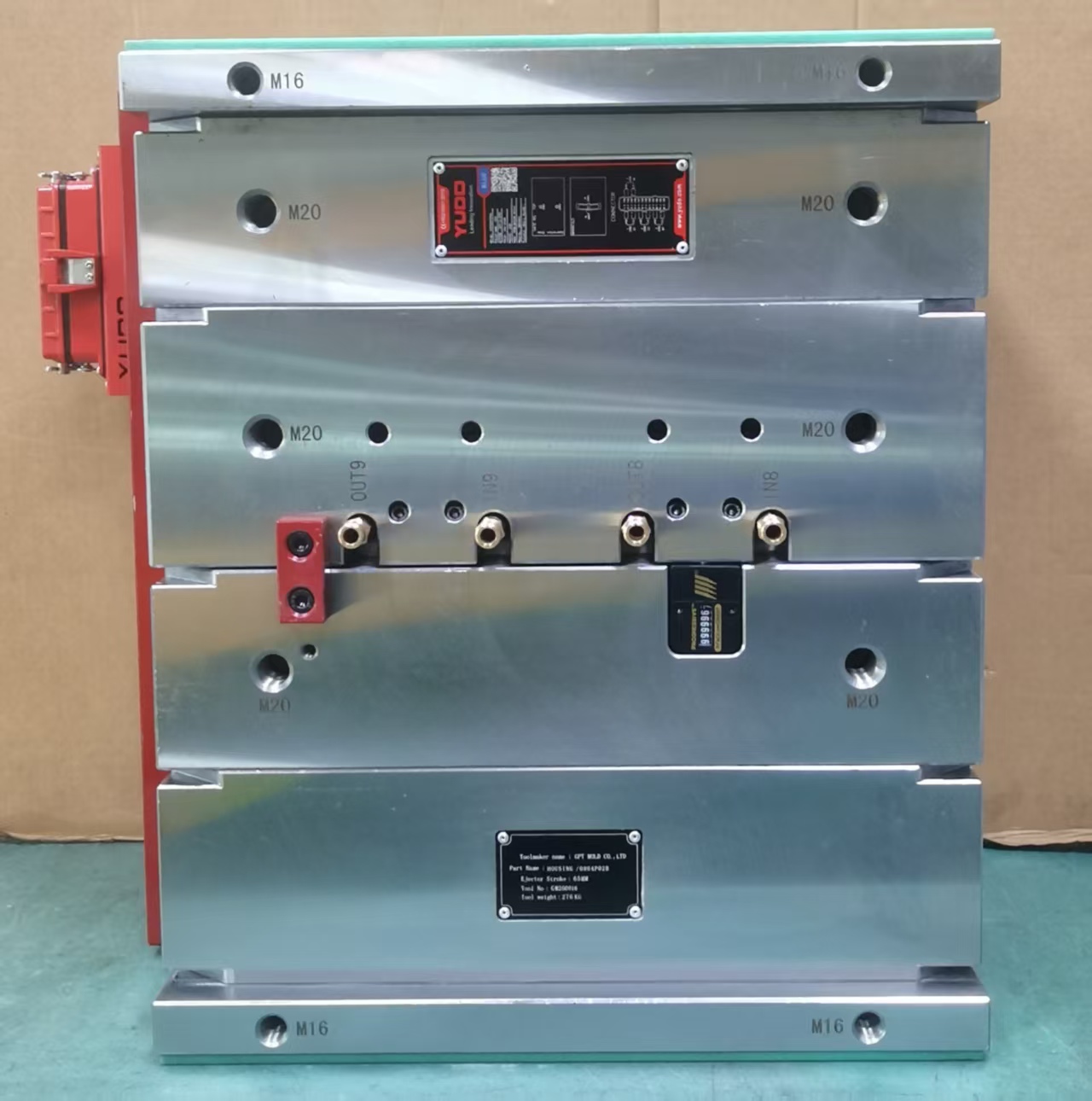
Precision export mold toling
Complex injection molds (with multi-slider mechanisms, hochpräzise Kavitäten, or integrated hot-runner systems) are prone to unique defects due to their intricate structures and strict tolerance requirements. Below are the most prevalent defects, their root causes, and actionable prevention/mitigation strategies:
1. Structural Mechanism-Related Defects
1.1 Slider/ Lifter Jamming or Synchronization Failure
- Manifestation: Hydraulic sliders (z. B., in automotive intake manifold molds) get stuck during mold opening/closing; multi-directional sliders fail to move in sync, causing cavity scratches or component deformation.
- Root Causes:
- Inadequate design of slider guide rails (clearance too tight/loose, tolerance >±0.02mm);
- Hydraulic system pressure mismatch or sensor calibration errors;
- Lack of lubrication or debris accumulation in slider tracks;
- 3D assembly simulation omitted in design phase, leading to unforeseen component interference.
- Vorbeugung & Lösungen:
- Conduct dynamic 3D synchronization simulationsin the design stage, setting slider alignment tolerance ≤±0.02mm and verifying stroke limits for all motion components;
- Calibrate hydraulic systems to ensure uniform pressure distribution (variation ≤5% across slider groups) and install position sensors for real-time synchronization monitoring;
- Use self-lubricating wear plates (z. B., bronze-graphite composites) on slider contact surfaces and add dust-proof seals to prevent debris intrusion;
- Perform 1,000+ dry-run cycles before mold trial to identify jamming risks and adjust guide rail clearance.
1.2 Collapsible Core Deformation or Breakage
- Manifestation: Split-type collapsible cores (for hollow parts like impeller blades or intake manifold runners) bend or crack during ejection, resulting in incomplete cavity forming or stuck parts.
- Root Causes:
- Core material hardness insufficient (z. B., <48 Rc for H13 steel);
- Unbalanced ejection force (micro-ejector pins for thin blades bear excessive stress);
- Inadequate cooling in core regions, causing plastic adhesion and forced ejection.
- Vorbeugung & Lösungen:
- Specify high-strength tool steel (z. B., tungsten steel inserts for micro-cores) with hardness ≥50 Rc and conduct ultrasonic flaw detection for internal material defects;
- Design a balanced ejection system(z. B., add auxiliary ejector pins for long impeller blades) and use servo-driven ejection to control force and speed;
- Integrate conformal cooling channels in collapsible cores (z. B., porous sintered copper inserts) to reduce plastic sticking and ejection resistance.
2. Dimensional & Precision-Related Defects
2.1 Cavity/ Core Dimensional Drift or Micro-Structure Damage
- Manifestation: Aerospace connector molds’ 0.2mm pin holes expand or deform after 10,000+ cycles; medical syringe cavities show wall thickness variation >0.01mm, failing tolerance requirements.
- Root Causes:
- Insufficient mold material wear resistance (z. B., using S136 steel without proper heat treatment);
- Micro-EDM machining errors (z. B., electrode wear causing pin hole diameter deviation);
- Uneven thermal expansion of mold components due to poor cooling design;
- Lack of post-machining stress relief, leading to cavity warpage over time.
- Vorbeugung & Lösungen:
- Use wear-resistant materials for critical cavities/cores: medical molds adopt heat-treated S136 stainless steel(hardness ≥48 Rc, mirror-polished to Ra 0.1μm); aerospace micro-molds use tungsten steel inserts for pin holes;
- Implement in-process machining monitoringfor micro-EDM: replace electrodes regularly (after every 50 micro-hole batches) and use CMM (±0.001mm accuracy) to inspect dimensions post-machining;
- Design symmetric cooling circuits to control mold temperature variation ≤±5°C, reducing thermal expansion-induced drift;
- Perform stress relief annealing (600–650°C for tool steel) after rough machining to eliminate internal stresses.
2.2 Multi-Cavity Filling Imbalance
- Manifestation: In 96-cavity medical syringe molds or multi-cavity smartphone frame molds, some cavities produce short shots while others have over-packing, causing inconsistent part quality.
- Root Causes:
- Unbalanced hot-runner nozzle temperature (variation >±5°C) or unequal runner lengths;
- Cavity pressure differences due to poor gate positioning;
- Inadequate CAE mold flow simulation in the design phase.
- Vorbeugung & Lösungen:
- Use multi-zone temperature-controlled hot-runner systems(nozzle temperature variation ≤±3°C) and design equal-length, symmetric runners (balance error %);
- Conduct detailed CAE Moldflow analysis to optimize gate location (z. B., side gates for syringe barrels, pin-point gates for micro-components) and verify filling balance across all cavities;
- Install cavity pressure sensors in key positions to monitor real-time filling status and adjust injection parameters (pressure, speed) dynamically during production.
3. Hot-Runner & Cooling System-Related Defects
3.1 Hot-Runner Nozzle Clogging or Melt Leakage
- Manifestation: Hot-runner nozzles (in intake manifold molds with 6–8 nozzles) get blocked by solidified plastic, causing short shots; nozzle seals fail, leading to melt leakage and mold surface damage.
- Root Causes:
- Inconsistent nozzle temperature (local overheating/cooling) or material degradation due to prolonged residence time;
- Low-quality nozzle seals or improper installation torque;
- Lack of regular maintenance and cleaning.
- Vorbeugung & Lösungen:
- Select precision hot-runner systemswith individual nozzle temperature control and install thermocouples for real-time temperature monitoring (deviation ≤±3°C);
- Use high-temperature resistant seals (z. B., Viton rubber) and torque wrenches to ensure uniform seal installation (torque tolerance ±5%);
- Establish a maintenance schedule: clean nozzles every 50,000 cycles with specialized cleaning agents and inspect for wear or damage to nozzle tips.
3.2 Uneven Cooling & Product Warpage
- Manifestation: Thin-wall impeller blades or 3D curved smartphone frames warp after ejection; intake manifold parts have dimensional distortion due to uneven cooling.
- Root Causes:
- Traditional linear cooling channels fail to cover complex curved surfaces (z. B., impeller blade cores);
- Cooling circuit flow rate mismatch (some channels have insufficient flow, causing local overheating);
- Mold material thermal conductivity is inadequate.
- Vorbeugung & Lösungen:
- Adopt conformal cooling technology(z. B., 3D-printed cooling channels or porous sintered copper inserts) to match the shape of complex cavities/cores, reducing cooling time by 30% and temperature variation by 40%;
- Calculate cooling circuit flow rates based on cavity heat load (ensure Reynolds number >4,000 for turbulent flow) and install flow meters for real-time monitoring;
- Use high-thermal-conductivity mold base materials (z. B., copper-beryllium alloys for micro-cavity inserts) to accelerate heat transfer.
4. Surface Quality-Related Defects
4.1 Cavity Surface Scratches or Coating Peeling
- Manifestation: Smartphone frame molds with DLC coatings develop peeling or scratches after 500,000 cycles; medical syringe cavities have micro-scratches that cause product burrs.
- Root Causes:
- Improper surface treatment process (z. B., insufficient pre-polishing before DLC coating, adhesion strength 0N);
- Foreign particles (z. B., glass fiber from nylon-GF materials) abrade cavity surfaces;
- Ejector pins or sliders make contact with polished surfaces due to assembly misalignment.
- Vorbeugung & Lösungen:
- Ensure pre-treatment of cavity surfaces (polish to Ra 0.05μm before coating) and test coating adhesion via pull-off tests (adhesion strength ≥60N);
- Install magnetic filtersin the injection system to remove hard particles from raw materials and use wear-resistant coatings (z. B., TiN or DLC) on cavity surfaces for abrasive materials;
- Add protective buffers (z. B., PTFE pads) between sliders/ejector pins and polished cavity areas, and verify assembly alignment with CMM to avoid contact.
4.2 Micro-Vent Blockage
- Manifestation: Micro-ventilation slots (0.1mm width on smartphone frames or impeller blades) get blocked by plastic flash, causing gas traps, burn marks, or incomplete filling.
- Root Causes:
- Vent depth/width exceeds design limits (z. B., >0.05mm for high-viscosity materials);
- Lack of regular cleaning, leading to plastic residue accumulation;
- Mold clamping force is too high, deforming micro-vent structures.
- Vorbeugung & Lösungen:
- Design micro-vents with precise dimensions (width 0.08–0.1mm, depth ≤0.03mm for PC+ABS materials) and verify via micro-imaging inspection post-machining;
- Integrate automatic vent cleaning channelsor schedule manual ultrasonic cleaning every 10,000 cycles;
- Calibrate mold clamping force (variation ≤±2%) to avoid vent deformation and use vent inserts for easy replacement when blocked.
Kategorie mit Seitenleiste Export von Formenwerkzeugen