Qualitätscheckliste für die Herstellung von hochpräzisen optischen Linsenformen
Inquiry- Description
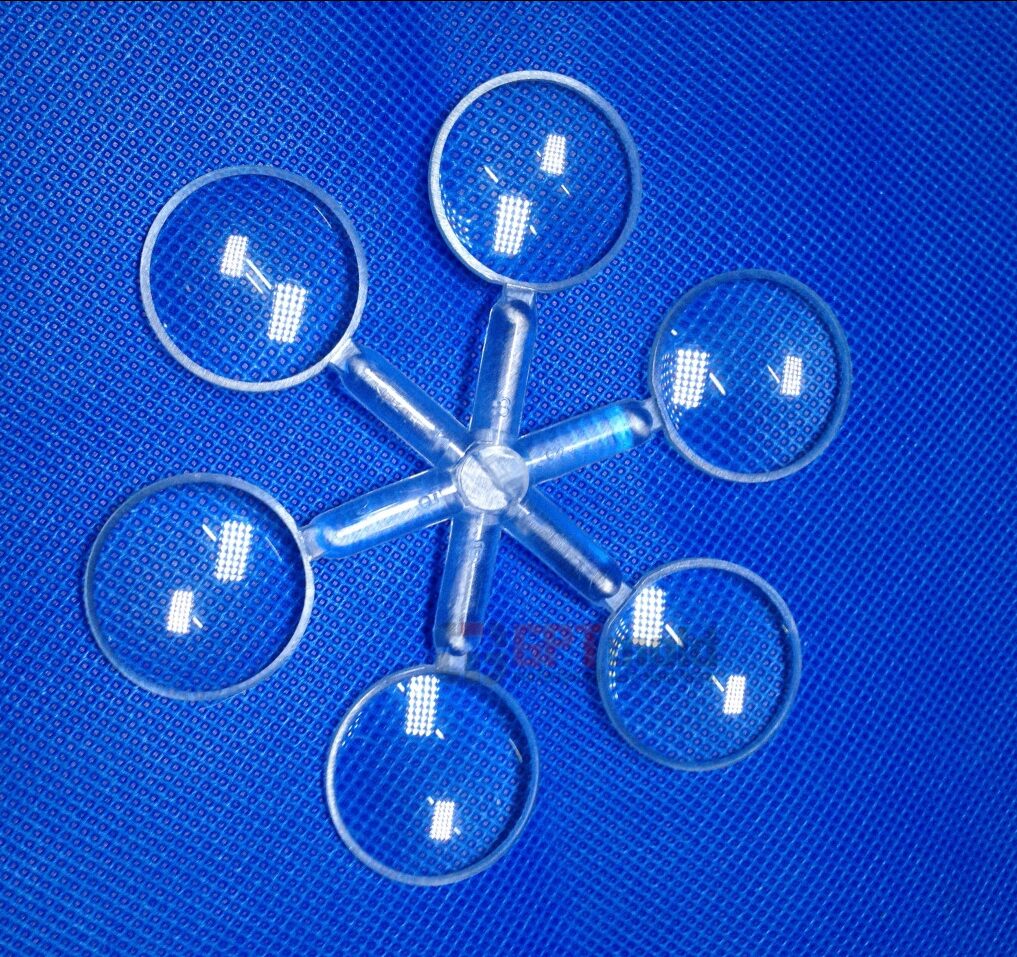 Qualitätscheckliste für die Herstellung von hochpräzisen optischen Linsenformen
hecklist applies to the production of molds for optical lenses (z. B., camera lenses, LED optical lenses, non-spherical lenses) with precision requirements of concentricity ≤0.003mm and surface roughness Ra ≤0.005μm. It covers 5 core stages: material preparation, precision machining, surface treatment, mold assembly, and trial validation, with clear acceptance criteria and inspection methods for each item.
| Stage | Check Item | Technical Requirement | Inspection Method | Acceptance Standard | Responsible Party | Remarks |
| 1. Material Preparation & Pre-Processing | 1.1 Mold blank material certification (cavity/core) | Material: S136/STAVAX stainless steel; chemical composition compliance with ASTM standard; for COP high-temperature lenses, use maraging steel (18Ni-300) | Review material certificate + spectral analysis | Certificate matches batch number; chemical composition deviation ≤±0.05% of standard value | Material QC Team | Vacuum degassing required for maraging steel to eliminate internal pores |
| 1.2 Forging and stress relief annealing (rough machining stage) | Forging grain flow direction consistent with cavity contour; stress relief annealing at 600–650°C for 4–6h, cooling rate ≤50°C/h | Metallographic inspection + hardness testing | Grain uniformity ≥Grade 2; surface hardness after annealing: 30–36 HRC | Heat Treatment Team | Avoid rapid cooling to prevent new stress | |
| 1.3 Vacuum quenching & tempering (final heat treatment) | Vacuum quenching at 1020–1050°C, 3× tempering at 500–520°C; hardness target: 55–58 HRC (S136) / 50–55 HRC (maraging steel) | Rockwell hardness tester (3 points per component) + ultrasonic flaw detection | Hardness variation ≤±1 HRC; keine inneren Risse oder Einschlüsse (Fehlergröße ≤0,01 mm) | Heat Treatment Team | Anlasszeit um 1 Stunde für große Formkerne verlängert, um Gleichmäßigkeit der Härte zu gewährleisten | |
| 2. Präzisionsbearbeitung | 2.1 Formplattenebene und Rechtwinkligkeit (Halbfinish) | Ebenheit ≤0,002 mm/100 mm; Rechtwinkligkeit zwischen Formplattenoberfläche und Führungszapfenlöchern ≤0,01 mm | Präzisionsflachschleifer + Laser-Interferometer | Vollflächenmessung, maximale Abweichung ≤0,0015 mm | CNC-Bearbeitungsteam | Einseitiges Schleifen, um wiederholte Spannfehler zu vermeiden |
| 2.2 Bearbeitung der Passstiftdurchgänge (Drahterodieren) | Lochdurchmessertoleranz: ±0,001 mm; Konzentrizität zwischen gepaarten Löchern ≤0,002 mm | KMG (Koordinatenmessmaschine, Genauigkeit ±0,001 mm) | 100% Prüfung aller 8 Passstiftlöcher, keine außer Toleranz liegenden Teile | EDM-Team | Bearbeitung in einer Spannung abgeschlossen, um Positionsgenauigkeit zu gewährleisten | |
| 2.3 Hohlraum/Kern Halbfinish (Moore-Präzisionsschleifmaschine) | Bearbeitungszugabe: 0.03mm for cavity surface; concentricity of core hole ≤0.001mm | KMG + optical comparator | Concentricity deviation ≤0.0008mm; allowance uniform (variation ≤0.005mm) | Precision Grinding Team | Jig grinder spindle runout ≤0.0005mm during processing | |
| 2.4 Ultra-precision diamond turning (non-spherical surface) | Cutting depth: 2–4μm (nickel-phosphorus plating layer); surface roughness target: Ra ≤0.01μm; non-spherical surface profile error ≤0.5μm | Optical profilometer + diamond tool wear monitor | Profile deviation ≤0.3μm; Ra ≤0.008μm; tool wear ≤0.001mm per 10 components | Ultra-Precision Machining Team | Processed in Class 1000 cleanroom to avoid dust scratches | |
| 3. Surface Treatment | 3.1 Mirror polishing (cavity/core surface) | Polishing sequence: 6μm→3μm→1μm→0.25μm diamond paste; target grade: SPI A-1 (Ra ≤0.005μm) | Rasterkraftmikroskop (AFM) + sichtbare Inspektion (10× Lupe) | Keine Kratzer, Grübchen oder Orangenhaut; Ra ≤0,004 μm; Oberflächenebene ≤0,001 mm | Polierteam | Endpolitur mit kolloidalem Silizium zur Verbesserung des Oberflächenglanzes |
| 3.2 DLC/TiN-Beschichtung (Kernoberfläche) | Beschichtungsdicke: 2–5 μm; Haftfestigkeit ≥50 N (Abreißtest); Reibungskoeffizient ≤0,15 | Beschichtungsdickenmesser + Abreiß-Hafttester | Dickenabweichung ≤±0,5 μm; kein Ablösen oder Blasenbildung der Beschichtung | Oberflächenbehandlungsteam | Beschichtung nach der Endpolitur aufgetragen, um Beschädigungen zu vermeiden | |
| 3.3 Nickel-Phosphor-Beschichtung (mikrostrukturierte Einsätze) | Galvanikdicke: 2–4μm; Galvanikuniformität ≤±0,2 μm; Oberflächenhärte: 50–55 HRC | Wirbelstromdickenmesser + Mikrohärtemessgerät | Uniformität erfüllt die Anforderungen; keine Galvanik-Lunker in Mikrostrukturen | Galvanikteam | Plating pre-treatment includes degreasing and activation to ensure adhesion | |
| 4. Mold Assembly | 4.1 Precision locating pin assembly | Interference fit: pin diameter 0.001–0.003mm larger than hole; mold plate heated to 70°C for press-fitting | Torque wrench + KMG (post-assembly inspection) | No pin looseness; concentricity of mold plate after assembly ≤0.003mm | Assembly Team | Use heat-resistant lubricant during press-fitting to avoid pin jamming |
| 4.2 Core-cavity fit adjustment | Main fit clearance (small end): 0.002–0.003mm (stationary mold); 0.003–0.005mm (moving mold); auxiliary fit clearance (large end): 0.008–0.015mm | Feeler gauge + KMG (coaxiality measurement) | Clearance within range; coaxiality of core and cavity ≤0.002mm | Assembly Team | Test fit with dummy core before formal assembly | |
| 4.3 Cooling circuit integrity test | Pressure test at 1.5× working pressure (1.5MPa); holding time 30min | Pressure gauge + bubble leak detector | No pressure drop (≤0.01MPa/30min); no water leakage at joints | Hydraulic Test Team | Conformal cooling channels to be inspected via industrial CT for blockage | |
| 4.4 Hot-runner system calibration (for large lenses) | Nozzle temperature variation ≤±3°C; temperature response time ≤10s | Temperature data logger (3 thermocouples per nozzle) | Temperature stability meets requirement; no nozzle clogging | Hot-Runner Team | Preheat for 30min before calibration to reach thermal equilibrium | |
| 5. Trial Molding & Performance Validation | 5.1 Trial resin material (optical grade) | Material: PMMA CR-39/PC LEXAN 141R/COP; purity ≥99.9%; no particulate impurities (≥0.1mm) | Material certificate + particle counter test | Impurity count ≤5 particles/kg; resin transmittance ≥92% | Injection Team | Resin dried for 4–6h at 80–100°C before molding |
| 5.2 Stabilität der Formtemperatur während des Versuchs | Formtemperaturabweichung ≤±3°C; Kühlwasserdurchfluss: 5–8L/min pro Kanal | Echtzeit-Überwachung mit Thermoelementen (4 Punkte rund um die Kavität) | Temperaturschwankung ≤±2°C; Durchfluss stabil (Abweichung ≤±0,5L/min) | Prozesskontrollteam | Verwenden Sie eine konstante Wassertemperatur für präzise Steuerung | |
| 5.3 Abmessungsprüfung der geformten Linse | Konzentrizität ≤0,003mm; Dickenabweichung ≤0,005mm; Nicht-sphärische Profilfehler ≤0,5μm | Optisches Koordinatenmessgerät (CMM) + Linsenzentriertester | Alle Abmessungen innerhalb der Toleranz; Keine astigmatische Abweichung durch Exzentrizität | Qualitätsprüfungsteam | Stichprobengröße: 20 Linsen pro Charge, 0 Akzeptanz bei Abweichungen außerhalb der Toleranz | |
| 5.4 Optische Leistungstest der Linse | Lichtdurchlässigkeit ≥90%; Keine Fließmarken/Brandmarken (Visuelle Prüfung bei 20× Vergrößerung); Oberflächenfehlergröße ≤0,01mm | Spektralphotometer + optical microscope | Transmittance ≥91%; no visible defects; surface scratch count ≤0 per lens | Optical Lab Team | Test in darkroom to avoid ambient light interference | |
| 5.5 Mold durability test (accelerated) | 10,000 injection cycles; cavity surface wear ≤0.001mm; coating adhesion remains ≥45N | AFM (post-test surface inspection) + adhesion test | Wear within limit; no coating peeling; lens quality consistent (defect rate ≤0.5%) | Reliability Test Team | Maintenance (ultrasonic cleaning) after 5,000 cycles to remove residue |
Kategorie mit Seitenleiste Optical mold