



Read the conditions alongside the results
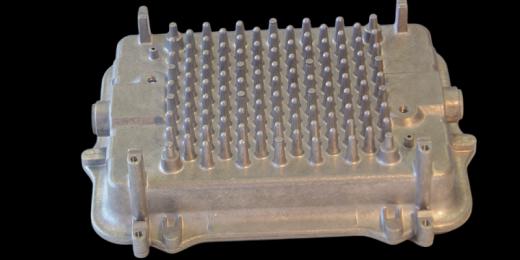
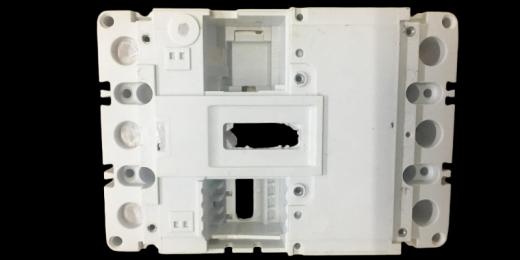
The archived housing study identifies ABS PA-765A with a mold-temperature input of 50°C and a melt-temperature input of 250°C. It reports a simulated fill time of 2.05 seconds and a pressure figure of 76 MPa. The report also recommends venting attention at weld-line or edge regions.
These values are useful when kept attached to their model and result definitions. Fill time describes the filling stage represented in the analysis. It cannot be used as a complete cycle-time promise. Similarly, a pressure number should be read with its plot label, location, analysis phase and modeled flow path before it is compared with a machine specification.
Review the fill pattern before ranking the pressure
For this housing, the next engineering question would be whether the modeled regions fill in a controlled sequence. A result summary alone cannot show whether one flow path advances while another hesitates, or whether a small region fills late.
The review should follow the fill animation and identify any regions that need closer attention. Those observations can then be compared with pressure distribution and, where available, the pressure-versus-time curve. Autodesk notes that marked changes in the slope of injection-location pressure can be associated with filling imbalance and recommends checking the corresponding fill results. Technical reference: pressure at the injection location.
A proposed gate or runner revision should therefore have a stated purpose, such as changing the sequence in a particular region. The comparison should hold other inputs constant where practical, so the effect of that proposed change can be understood.
Put the pressure figure on the right basis
Before using the reported 76 MPa for machine planning, confirm whether the underlying result includes the part alone or additional feed-system geometry, and whether it represents end-of-fill, switchover or another defined output. The archive’s headline figure should not be assigned a more specific meaning than its supporting plot establishes.
The machine-side comparison also needs a consistent pressure basis. Plastic injection pressure and hydraulic pressure are related through the machine’s intensification ratio; the same numerical value on two differently defined displays is not necessarily equivalent. Technical reference: Autodesk injection-pressure definition.
A practical review would also consider the selected screw configuration, available flow rate and the pressure limit applicable to the proposed setup. The aim is to define a credible trial window, with machine data supporting the comparison.
Preserve the venting question in the trial plan
The report’s venting recommendation should remain a location-specific checkpoint. Review the identified edge or weld-line regions against the mold design, then decide what observations the trial needs to capture.
A controlled first-trial record could associate fill progression, visible surface condition and measured shot behavior with each set of settings. If a problem appears, the team can compare it with the predicted location and assess a targeted adjustment. Vent geometry or processing changes would require their own recorded checks rather than an assumption that the simulation recommendation was already implemented.
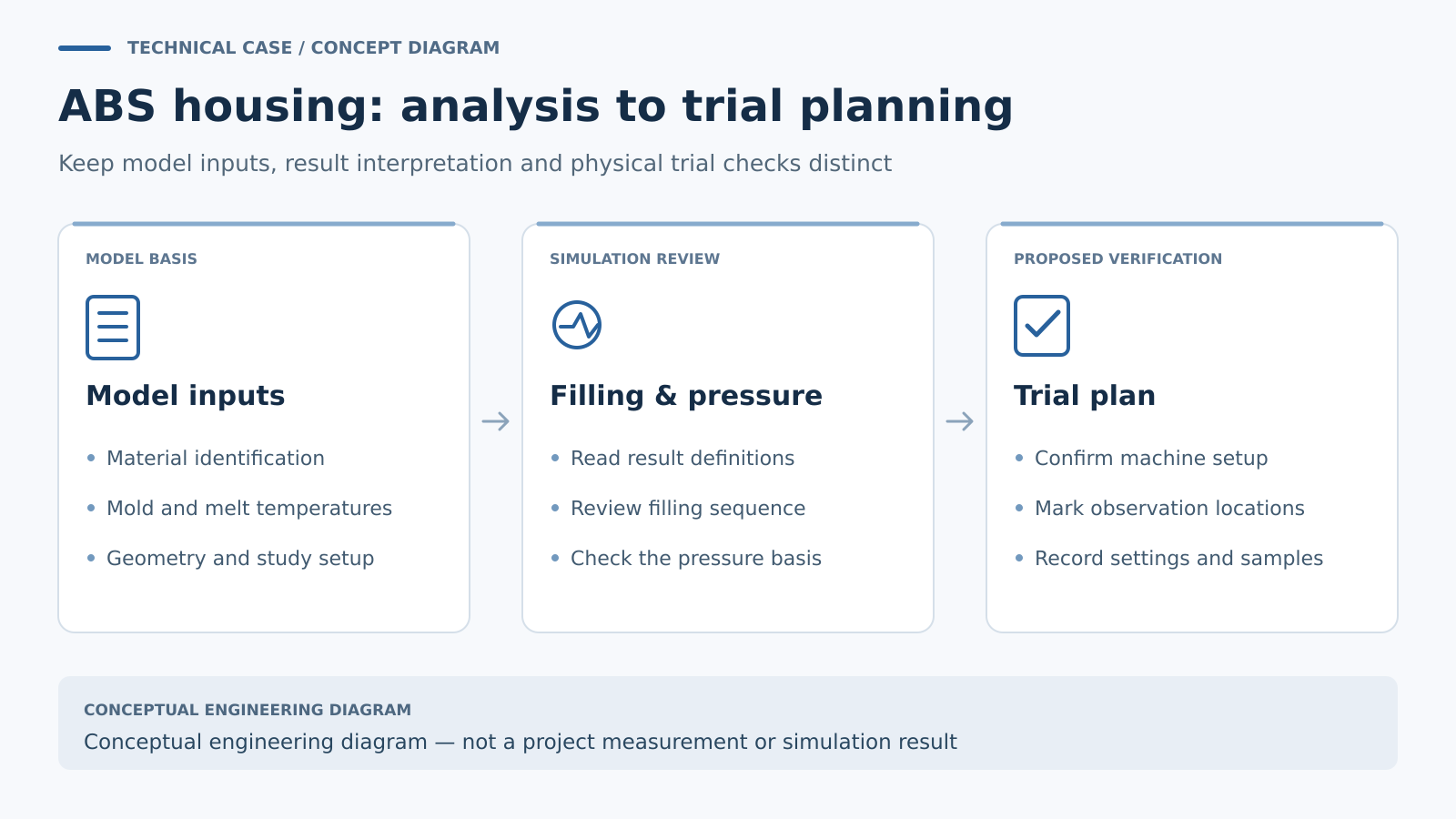
The lesson from this housing study is to use a numerical result as the start of a decision chain: model conditions, fill pattern, pressure definition, machine comparison and an observable trial question.
Prepare a housing-tooling inquiry
Send the current model, resin specification, cosmetic and dimensional priorities, and intended machine details. Include any existing simulation report with its study revision. Contact GPTMOLD to discuss a mold-flow review.